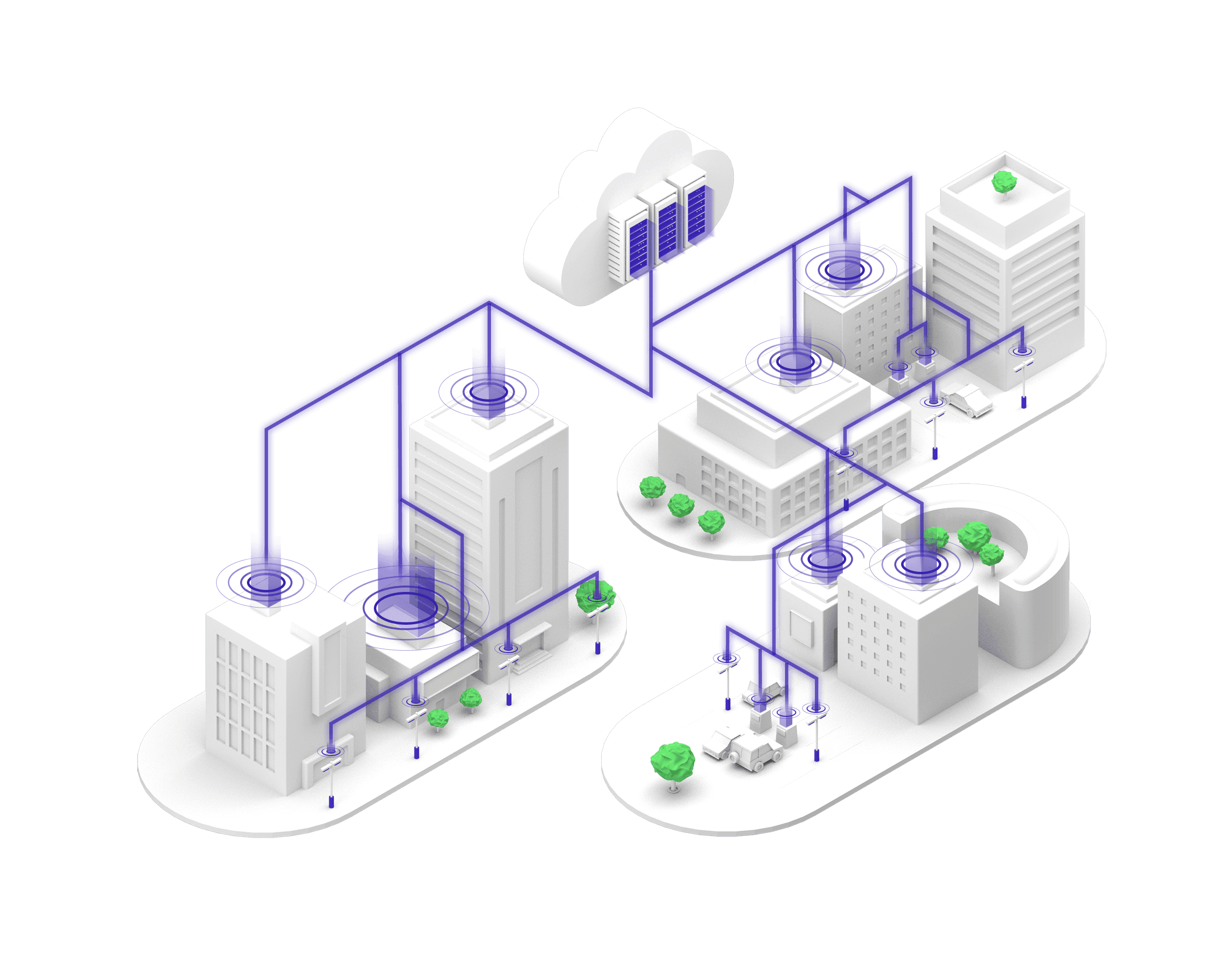

The BACS decree (Building Automation & Control Systems) is a new regulation that requires the installation of automation/control systems in tertiary buildings equipped with HVAC (heating, ventilation, air conditioning) in France.
The goal? To durably reduce energy consumption without compromising comfort or maintenance.
Sensinov, an expert in energy performance, offers you this complete guide: understand the BACS regulation, check whether you are concerned, identify the required BMS functions and roll out a compliance roadmap.
Download the Sensinov BACS Decree checklist (PDF)
What is the BACS decree?
The BACS decree is part of the drive toward energy sobriety and complements the Éco-énergie Tertiaire (Tertiary Decree). It aims to generalize building management systems (BMS) able to precisely measure, analyze and control a building's major energy uses.
What is a BACS for?
A BACS is used to continuously monitor consumption (electricity, gas, heat…), detect drifts and automatically control equipment to adjust setpoints to occupancy, time of day and weather conditions. In practice: lower heating at night, optimized lighting, demand-controlled ventilation, comfort/eco scenarios, alerts in case of anomalies, and so on.
Results: measurable energy savings, stabilized comfort and better-targeted maintenance.
Key definitions for the BACS decree
- BMS / single-system controller: the BMS supervises several systems (HVAC, lighting, security…). A single-system controller targets one sub-system (e.g. the boiler only).
- Hypervision: a central interface (web/app) that aggregates data, alarms and controls.
- HVAC: heating–ventilation–air conditioning, at the heart of the BACS regulation.
- Interoperability: the ability to communicate with heterogeneous equipment/protocols (BACnet, Modbus, KNX, IoT…).
- BACS classes (A→D): a performance framework (aim for A or B).
- OPERAT: the ADEME platform for the annual declaration of consumption (Tertiary Decree).
Who is concerned by the BACS decree?
Which buildings are concerned by the BACS decree? Types & uses
The main buildings targeted are:
- Offices
- Educational premises
- Healthcare facilities
- Retail premises
- Hotels/catering (hospitality sector)
- Government and administrative offices
- Logistics and storage warehouses
- Indoor sports facilities, etc.
- Mixed-use buildings are assessed on their tertiary portion.
What are the thresholds and deadlines of the BACS decree?
The BACS regulatory timeline applies according to HVAC power; here is a summary of the relevant thresholds and deadlines:
- HVAC power > 290 kW: BACS mandatory by 01/01/2025 at the latest (existing buildings).
- HVAC power > 70 kW: BACS mandatory by 01/01/2027 at the latest (existing buildings).
- New builds: BACS integrated from construction (thresholds depend on the building-permit date).
This BACS timeline makes it easy to quickly identify the key compliance deadlines based on the power of the installations.
Practical details: power is counted cumulatively per building (all equipment serving the building). A multi-building site is handled building by building.
Good to know: an economic exemption is only possible if the study demonstrates an ROI > 10 years (method specified by decree). The BACS inspection is periodic (defined frequency, with a first inspection following commissioning).
The special case of multi-site operators and property portfolios
The obligation is triggered at the level of each building. In operation, a multi-site hypervision simplifies overall monitoring (benchmarks, action plans, consolidated alarms) and portfolio compliance: start with the sites above the thresholds, then extend based on ROI.
What are the requirements of the BACS decree?
The BACS decree expects an operational system covering four main pillars with genuine interoperability:
1. Measurement & monitoring (points, frequency, history)
- Points to instrument: energy meters (electricity, gas, heat), sub-metering by use, ambient/per-zone temperatures, equipment status (boilers, heat pumps, air handling units…).
- Frequency & data quality: regular reporting (typically hourly), reliable time-stamping, handling of missing data.
- Dashboards: real time + history (day/week/month), comparisons against baselines/the tertiary target, indicators (kWh, W/m², weather factors, occupancy hours).
- Goal: make drifts visible (over-consumption, leaks, inconsistent setpoints) so you can act quickly.
2. Control & setpoints
- Time scheduling by zone/use: on/off, night-time and weekend setbacks.
- Dynamic setpoints: temperatures, flow rates, lighting (controlled by occupancy/daylight).
- Scenarios Comfort / Eco / Frost-protection / Degraded, automatic switching, secure manual override.
- Aim: align operation with actual need and eliminate unnecessary round-the-clock operation.
3. Alarms & notifications (rules, escalation)
- Rules: threshold breaches (temperature, kWh, ΔP), equipment faults, communication losses.
- Prioritization & noise reduction: criticality, delays, handling instructions, escalation if not acknowledged.
- Distribution: interface, email/SMS, maintenance ticketing.
- Alarm log: who/what/when, status, time to resolution.
4. Logging & traceability (compliance evidence)
- Logs: historical measurements, alarms, user actions (setpoint changes, overrides), versions/updates.
- Exports & reports: scheduled PDF/CSV (monthly energy, alarm summary).
- Archiving: retention policy (≥ inspection cycle), backups.
- Purpose: build an evidence file and feed tertiary reporting (OPERAT).
5. Interoperability & connectors (meters, protocols)
- Open standards: BACnet (IP/MS-TP), Modbus (TCP/RTU), KNX, Lon, OPC UA, REST/MQTT APIs, IoT (LoRaWAN…).
- Heterogeneous sensors & meters: integration without replacing existing equipment, gateways where needed.
- Multi-vendor: a BMS that is neutral toward OEMs to avoid proprietary lock-in.
- Multi-site hypervision: shared views, roles & permissions, single sign-on.
The Sensinov solution interfaces natively with BACnet/Modbus/KNX and IoT networks (e.g. LoRaWAN) to aggregate existing equipment (metering, HVAC, lighting) and quickly deploy compliant control without a heavy overhaul. This approach ensures smooth, scalable compliance, backed by Sensinov's technology and expertise.
BACS timeline: how to reach compliance?
Sensinov, a benchmark in tertiary-sector energy performance, shares its method for becoming compliant:
0–30 days: scoping, inventory, quick wins
First step: scope the project, map the existing setup and launch quick gains.
- Governance: appoint a BACS lead (owner/operator) and, if needed, BMS project-management support (AMO).
- Inventory: HVAC equipment, ratings, existing controls, sensors/meters, networks.
- Applicability: confirm thresholds (70/290 kW), deadline, risks.
- Functional scoping: measurement/control scope, expected views, alarm rules.
- Quick wins: schedule settings, setpoints; small, high-impact sub-metering.
- Budget & financing: ballpark costing, anticipated energy-savings certificates (CEE), project schedule.
31–60 days: BMS/hypervision deployment, acceptance testing
Second phase: deploy the solution, connect the equipment and validate through testing.
- Solution/integrator selection: criteria = interoperability, usability (simplicity), security, multi-site support.
- Installation & wiring: communicating meters, sensors, controllers, protocol gateways.
- Configuration: tree structure, points, alarm rules, setpoints & scenarios, views.
- Acceptance testing: data-feed tests (plausible values), command tests (setpoint → action), alarm tests (thresholds/escalation), documentation.
- Training: day-to-day operation (dashboards, reporting, alarms).
61–90 days: operation, reporting, inspection preparation
Final phase: run day-to-day operations, automate reporting and prepare for the inspection (evidence file).
- Ramp-up: weekly review of curves, setpoint corrections, schedule fine-tuning.
- Automated reports: monthly energy (kWh, €), alarm summary, comfort KPIs.
- Dry-run audit: check against the BACS checklist, last-minute corrections.
- Evidence file: gather the inventory, diagrams, acceptance reports, logs, exports.
- Long-term plan: BMS maintenance, updates, inspection frequency.
What is the budget to comply with the BACS decree?
CAPEX vs OPEX: typical cost items
- CAPEX: sensors/meters, controllers/gateways, server or SaaS, licenses, integration/configuration, training.
- OPEX: SaaS subscription or software maintenance, periodic inspection, support/operation, calibrations & minor replacements.
Expected gains: energy, maintenance, compliance
The essentials on costs, expected gains and the funding levers to explore.
- Energy: fast savings thanks to optimized schedules/setpoints, automated controls and drift detection.
- Maintenance: fewer emergencies, more preventive/predictive work (temperature monitoring, run times, smart alarms).
- Compliance: meeting the BACS decree and easing the Tertiary Decree (reliable data for OPERAT).
The Sensinov solution offers a hypervision that is easy to operate (business-oriented views, automated reports, ready-to-use scenarios). The gains are secured and long-lasting, and the platform becomes a complete energy cockpit serving budget, comfort and BACS compliance.
Schemes & subsidies (leads to pursue)
- CEE (Energy Savings Certificates): significant subsidies for a high-performance BMS.
- ADEME/regional grants: depending on calls for projects.
- Financing models: SaaS (limits CAPEX), third-party financing/leasing to spread the cost.
- Taxation: check whether accelerated depreciation is available.
The checklist to reach compliance
What are the technical prerequisites?
- Cumulative HVAC power per building (kW) and supporting documents.
- Detailed inventory of equipment (boilers, heat pumps, chillers, air handling units, etc.).
- Mapping of measurement points and zones.
- Network/IoT availability and cybersecurity (access, backups).
- Historical consumption data (for the baseline).
- Roles & responsibilities (owner, operator, project-management support, integrator).
Tests & acceptance (measurements, alarms, logs)
- Measurements: plausibility, consistency (kWh vs physical meters).
- Commands: setpoint sent → observed action (evidence).
- Alarms: relevant thresholds, noise reduction, escalation, correct recipients.
- Reports: automatic generation, archiving.
- Logging: time-stamped logs (alarms, actions, changes).
- Security: named accounts, MFA where possible, backups.
Evidence file (who, what, where)
- Who: the BACS lead + integrator/maintenance contacts.
- What: acceptance reports, list of control points, monthly reports, log extracts, procedures.
- Where: location of controllers/servers, hypervision access, backup plan.
Sensinov feedback on implementing the BACS decree
The projects deployed by Sensinov concretely demonstrate the benefits of the BACS decree when combined with a high-performance hypervision. Across several tertiary sites (hospitals, offices, educational institutions and public buildings), the Sensinov solution delivered:
- an average 15–25% reduction in energy consumption, thanks to schedule optimization and automatic equipment control;
- improved maintenance through centralized alarms and proactive drift detection;
- better multi-site visibility, making OPERAT reporting and regulatory compliance easier.
A concrete example: across a network of healthcare facilities, Sensinov deployed a connected BMS integrating consumption monitoring, air-handling-unit control and temperature-setpoint management. Result: energy savings of over 20% and stabilized user comfort.
This feedback confirms that the BACS approach, backed by an interoperable and scalable hypervision, is a high-return investment for owners and operators.
Conclusion
In summary, the BACS decree aims to equip tertiary buildings with intelligent systems able to measure, control and optimize the energy consumption of HVAC equipment. It is a key step toward meeting the Tertiary Decree's objectives and durably improving the energy performance of the building stock.
How does it work? A BACS relies on a Building Management System (BMS) and a hypervision able to collect consumption data, automate setpoints based on occupancy and generate alerts when drift occurs. These features ensure continuous, measurable energy management.
How do you reach compliance? Implementation follows three main steps: scoping and equipment inventory, deployment of an interoperable BMS, then operation and audit. A 90-day roadmap makes it possible to achieve regulatory compliance while maximizing return on investment.
Sensinov's role: as an expert in energy performance and BMS, Sensinov supports owners and operators at every phase of the BACS project. Its interoperable, scalable hypervision platform aggregates data, automates control scenarios and proves compliance. Sensinov turns BACS into a concrete lever for energy control and operational simplification.
BACS Decree FAQ
1. Am I concerned by the BACS decree?
Yes, if your tertiary building has an HVAC power > 70 kW (2027 deadline); > 290 kW (2025 deadline). New builds: BACS integrated from construction.
2. What evidence must be provided in the event of an inspection?
A system in operation covering HVAC, historical measurements, alarm rules, action logs, reports and an acceptance report.
3. How long does it take to reach compliance?
Start now: given study and integration lead times, aiming for a 90-day plan per building is good practice.
4. Is a BMS 'mandatory'?
The decree requires an automation and control system equivalent to a BMS (performance class A/B recommended).
5. Are multi-site portfolios concerned?
The obligation applies per building. A multi-site hypervision simplifies overall management (benchmarks, consolidated alarms, consistent setpoints).
6. What penalties are possible?
The text emphasizes commissioning and inspection. The main issue remains compliance and meeting the objectives of the Tertiary Decree (otherwise there is a risk of penalties via OPERAT).